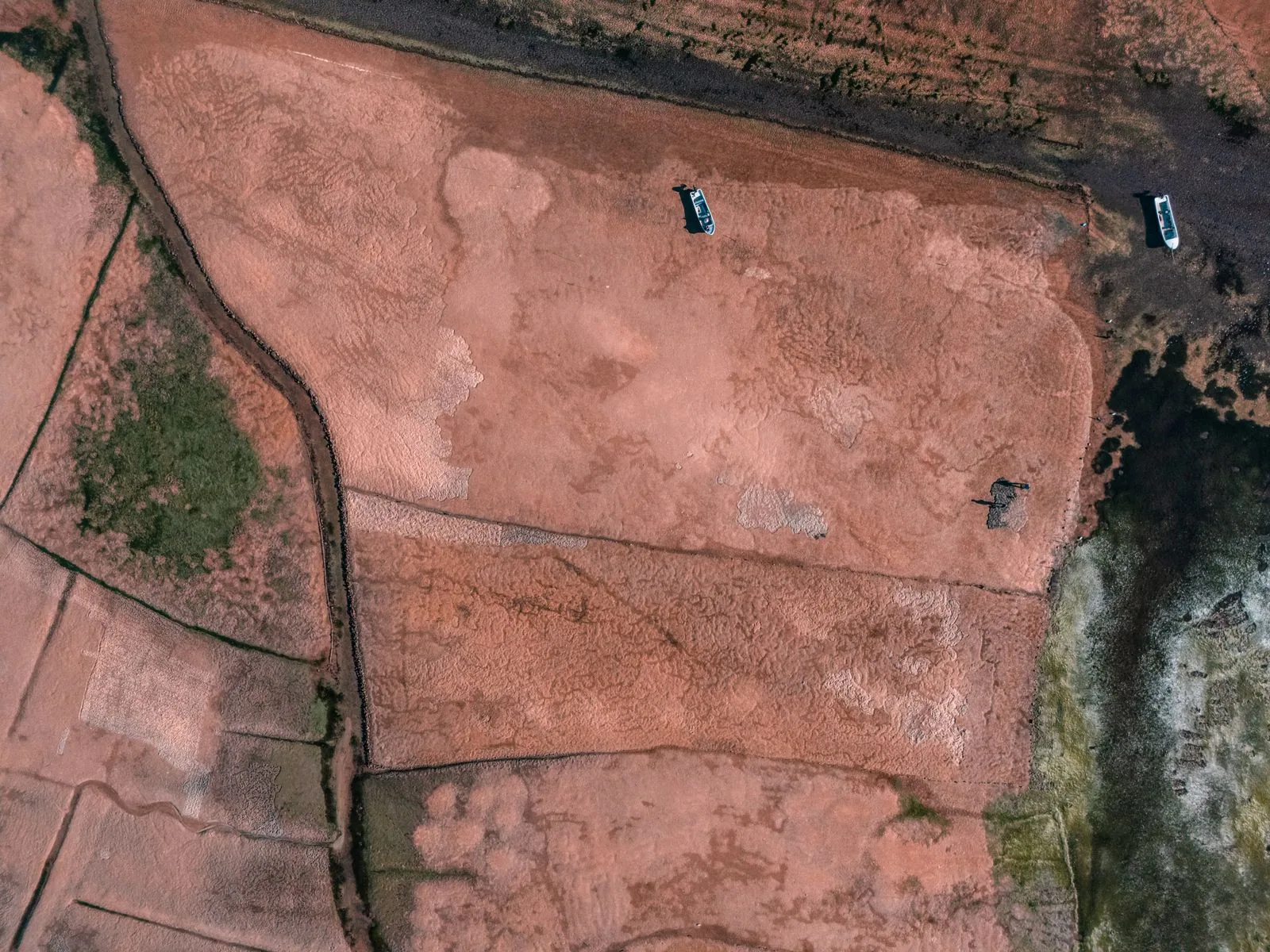
Being outside a reserve does not prove you can build. Being inside one does not mean every use is prohibited either. The answer depends on the plot, the proposed intervention and the applicable rules.
RAN and REN protect different things
Portugal's National Agricultural Reserve, known as RAN, protects land suited to agriculture. Non-agricultural uses are exceptional and depend on the legal category and conditions. Buying agricultural land does not itself create a right to build a home.
The National Ecological Reserve, or REN, protects areas with ecological functions or exposure to hazards. These can include infiltration areas, water margins, flood-prone land or vulnerable slopes. Its rules restrict interventions such as construction, roads, excavation and earth filling.
Legislation provides for compatible uses and activities with their own conditions and procedures. This is not a general authorisation. A plot may fall within both reserves and need to comply with both.
Identify the correct plot first
Request the property tax record, the permanent land registry certificate and available mapping. Check the location, boundaries and correspondence between documents. If they differ, seek clarification before commissioning a design.
The cadastre, tax register, land registry and municipal land-use classification have different purposes. The word “urban” in a tax document does not replace a planning assessment. A building marked on a map does not prove it is lawful or can be used as a home.
Avoid deciding from a screenshot without a legend, date or visible boundaries.
Compare the layers, not just the map colour
Consult the municipal master plan, or Plano Diretor Municipal (PDM), including its regulations, land-use map and constraints map. Check other applicable plans and amendments currently in force.
Depending on the location, the assessment should cover:
- RAN, REN and their boundaries.
- Water resources, public-domain land and protection zones.
- Protected areas, natural features and heritage.
- Restrictions associated with roads, utility networks and other infrastructure.
- Wildfire, flood and ground-instability hazards.
- Lawful access, water supply and wastewater arrangements.
A map with no visible overlay is not enough to declare that restrictions are absent. Check the publications and current mapping, particularly near boundaries. The Directorate-General for Territory warns of possible differences between vector data and the officially published REN boundary.
An example of overlapping constraints
Imagine a plot where the intended house site appears outside REN, but the only proposed access crosses an affected area. The assessment must cover the house, access and associated works.
Another plot may be outside both RAN and REN while the PDM still prevents the intended residential use. A nearby road and electricity supply do not establish a right of access or a feasible connection either.
Ask about the specific intervention
Take a plan showing the plot boundaries and a description of your proposal to the municipality. Ask which rules apply, which authorities must be involved and which documents are missing.
In the Algarve, CCDR says applications for non-agricultural use of RAN land must include a municipal opinion on compatibility with the PDM. For REN, the procedure depends on the use and applicable conditions. Confirm the route for your project with the municipality and competent authority, including any further consultations.
Do not treat an agricultural shelter as a future house merely because it appears on a list of possible uses.
Decide using a documented file
List the unresolved questions and, where appropriate, prepare a prior information request. Compare the response with the project and the actual cost of access and infrastructure.
To begin local checks, see the guides for Loulé, Faro, Olhão, Tavira and São Brás de Alportel. Keep the replies and documents used. Information that remains unknown should continue to be recorded as unknown.
Verified sources
Official information to check
General information reviewed against official sources available on September 17, 2026. It does not replace legal, tax, financial or technical advice for your circumstances.